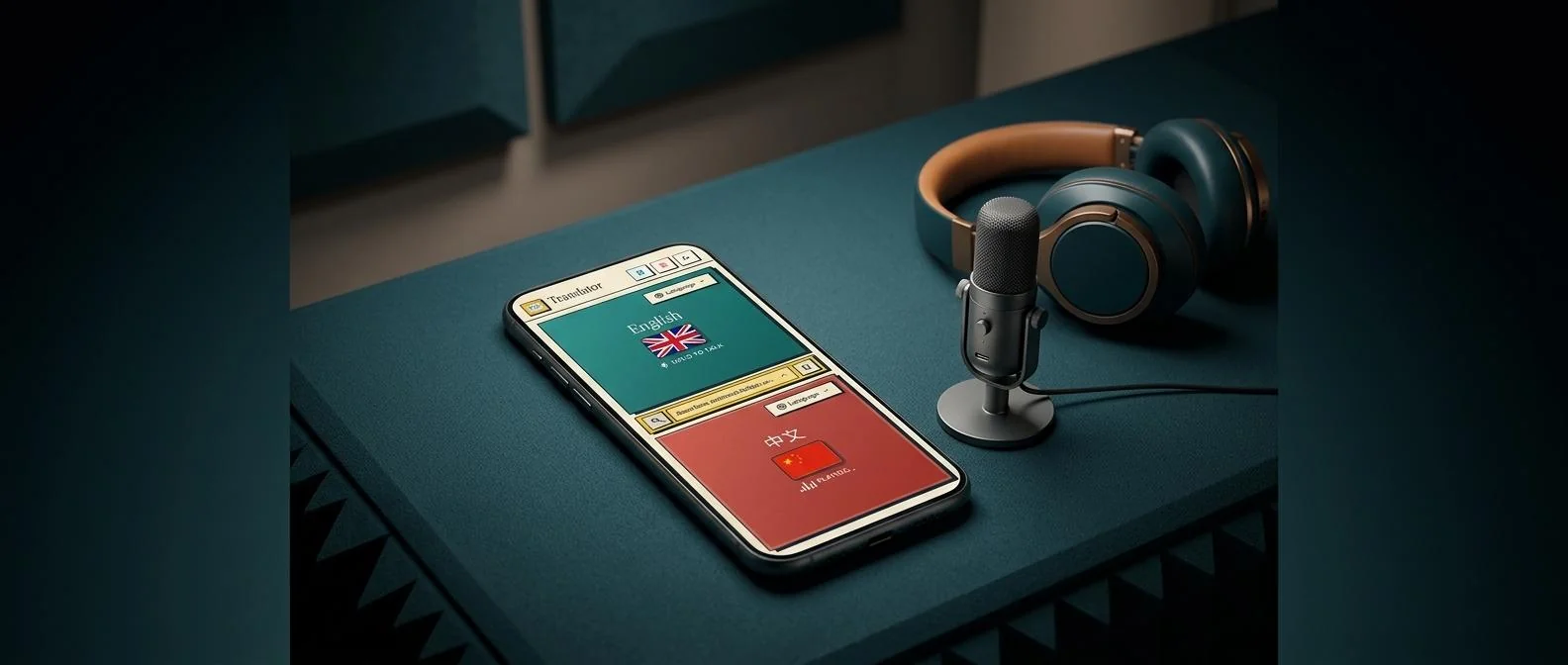
How Real-Time Voice Translation Works
The acoustic engineering, streaming neural pipelines, and human factor constraints that make natural face-to-face speech translation possible.
- The 200ms human turn-taking benchmark. Human conversation operates on a razor-thin 200–250ms Floor Transfer Offset; system delays over 1 second break conversational rhythm.
- Asynchronous streaming pipeline architecture. Overlapping ASR token generation, MT inference, and neural TTS streaming cuts end-to-end latency from 4 seconds to under 800ms.
- Affective prosody and emotional mirroring. Preserving vocal pitch, cadence, and emphasis eliminates robotic monotone delivery and restores genuine human rapport.
The Psycholinguistics of Human Turn-Taking
Natural human conversation is not merely a transmission of text; it is an intricately synchronized, rhythmic dance. Across dozens of world languages, the temporal gap between conversational turns—known linguistically as the Floor Transfer Offset (FTO)—averages between 200 and 250 milliseconds.
Because the human brain requires approximately 600ms to formulate and articulate a spoken word, listeners actively predict the end of their partner's sentence while still listening. When a translation system introduces a 2- to 4-second delay, the brain instinctively interprets the silence as social hesitation, disagreement, or friction. Maintaining sub-second latency is essential for preserving natural dialogue.
For a speech translation interface to feel like a real conversation rather than consecutive interpretation, total round-trip latency must stay below 1,000 milliseconds.
Spoken Exchange Demonstrating Low Latency
Direct streaming audio allows natural back-and-forth dialogue without awkward waiting intervals.
Bilingual Audio Comparison
Listen to the natural spoken phrasing in both languages:
“Natural turn-taking with direct audio streaming reduces conversation latency to under one second.”
“实时语音流式传输让跨语言对话非常流畅,就像面对面直接交流一样。”
Hearing the translated response within milliseconds allows interlocutors to maintain eye contact and natural gestures.
The Streaming Pipeline Latency Budget
Traditional cascaded translation waits for the user to finish speaking before processing the sentence. Modern streaming architectures overlap all three stages asynchronously:
| Pipeline Stage | Sequential Architecture | Streaming Architecture | Human Impact |
|---|---|---|---|
| 1. Audio Transport | 200–400 ms (HTTP upload) | < 50 ms (WebRTC/WebSocket) | Zero perceptible transmission lag |
| 2. Speech Recognition (ASR) | 1,000–1,800 ms (full audio) | 100–200 ms (partial tokens) | Immediate visual feedback |
| 3. Machine Translation (MT) | 800–1,200 ms (full text) | 200–350 ms (first token out) | Continuous semantic alignment |
| 4. Neural Voice Synthesis (TTS) | 1,200–2,000 ms (full sentence) | 150–300 ms (streamed audio) | Natural cadence & prosody |
| Total Perceived Latency | 3,200–5,400 ms | < 800 ms | True conversational flow |
Cascaded Pipelines vs. Direct Speech-to-Speech Models
Engineers balance translation fidelity, dialect support, and latency using two distinct architectural models:
Cascaded Neural Pipelines (ASR + LLM + TTS)
- Highest linguistic accuracy for 100+ global languages.
- Allows custom domain glossaries and safety filtering.
- Streaming partial token overlaps achieve <800ms response times.
Direct Speech-to-Speech (Audio-to-Audio)
- Maps acoustic features directly without text bottleneck.
- Preserves original speaker vocal timbre and emotion natively.
- Currently constrained to limited language pairs in production.
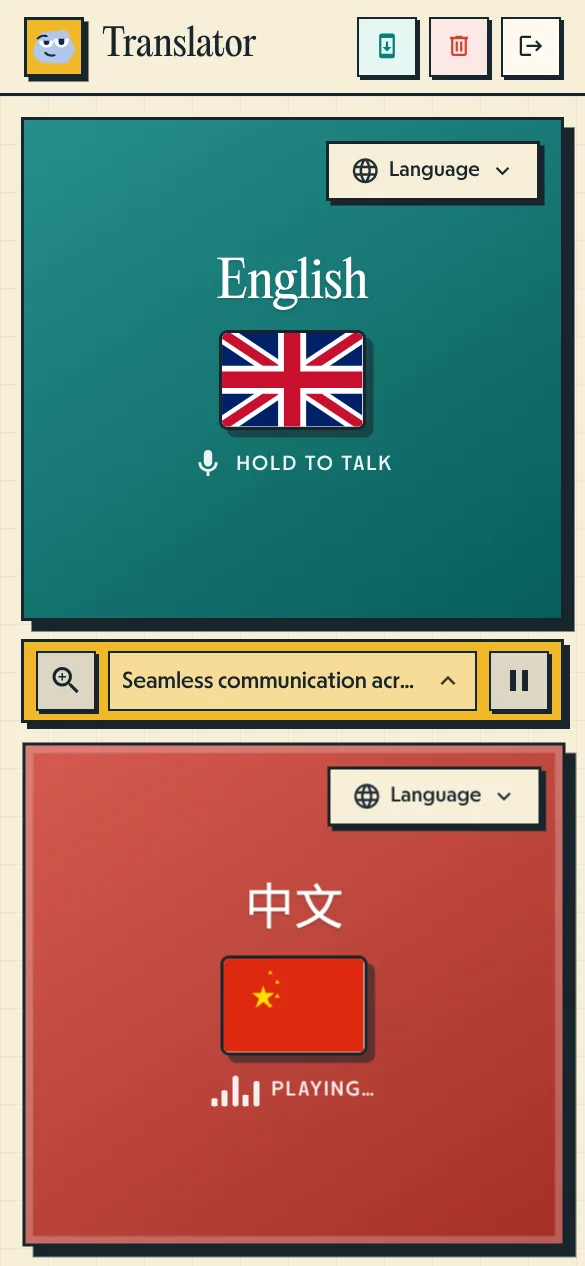
Live Visual Interface in Voice Translator
Voice Translator combines low-latency audio streaming with a clean, dual-speaker interface designed for instant turn-taking and visual confirmation.
Human Factors for Seamless Spoken Translation
To get the most out of real-time speech translation in real-world scenarios:
- Speak in Complete Thought Units: Pause naturally between complete sentences to allow the semantic end-pointer to flush translation chunks cleanly.
- Manage Ambient Acoustics: Position the device microphone close to the speaker in noisy venues. Learn more in our guide on why translation apps fail in noisy places.
- Maintain Natural Eye Contact: Share the device naturally between both speakers without staring down at the screen. Explore our guide on two-person, one-phone translation etiquette.
For real-world application in travel scenarios, read our pillar guide on everyday spoken conversations abroad.
Speak naturally across 100+ languages. Pallie streams translated audio in real time.
Open Pallie Translator