Resolving Neighbor & Roommate Disputes
How to address loud music, TV volume, chore divisions, and shared building boundaries without escalating into hostile conflicts.
- Address noise politely in person during daytime hours. Avoid angry floor banging or passive-aggressive notes. A calm, friendly daytime conversation de-escalates tension immediately.
- Focus on the building acoustics, not the person. Frame the issue around thin walls and early work alarms rather than accusing your neighbor of being intentionally disruptive.
- Use spoken voice translation for polite phrasing. Delivering a gentle request in your neighbor's native language ensures your tone is heard with complete warmth and respect.
Living in close quarters means sharing walls, hallways, and sound. When an upstairs neighbor plays loud television late at night or a roommate forgets their cleaning turn, language barriers can make asking for quiet feel awkward and confrontational.
Most neighbor disruptions are completely accidental. Approaching your neighbor with empathy, warm body language, and clear voice translation turns a potential dispute into mutual respect.
Why passive-aggressive notes make things worse
When frustrated by late-night music, people often slip angry notes under doors or bang on radiators.
Written notes lack tone, facial warmth, and eye contact. Translated written notes can sound cold, demanding, or threatening, triggering immediate defensiveness.
Instead, knock on the door the next afternoon with a warm smile: “Hello neighbor! The walls in our building are quite thin, and I have an early morning alarm...”
Polite neighbor scripts in English and German
Use these culturally adjusted scripts to handle common apartment building friction points:
| Issue | Accusatory Approach (High Conflict) | Respectful Script (German / English) | Why It Works |
|---|---|---|---|
| Loud TV Late at Night | “Your television is blasting all night. Turn it down!” | “The walls are quite thin. Could you lower the volume a little after 10 PM?” | Blames building acoustics rather than attacking the neighbor. |
| Running Washer on Sunday | “It is Sunday, you are not allowed to do laundry!” | “Just a friendly reminder that our building observes quiet hours on Sundays.” | Educates politely on local *Ruhezeit* rules without scolding. |
| Shared Hallway Clutter | “Move your shoes and packages out of the hallway.” | “Could we keep the stairwell clear so everyone has room to pass safely?” | Frames the request around communal safety and accessibility. |
| Dog Barking During Work Hours | “Your dog has been barking nonstop all day long.” | “Your sweet dog seemed a bit anxious today and was barking while you were away.” | Shows caring concern for the pet while alerting the owner. |
The 3-point de-escalation framework
When addressing neighbor or roommate friction, follow this three-step structure:
What Escalates Tension
- Confronting late at night: Knocking on doors at midnight when emotions are raw.
- You-statements: “You are always disrespectful and noisy.”
- Threatening authorities: Immediately threatening landlords or police.
What Creates Collaboration
- Daytime conversation: Visiting the next afternoon with a calm demeanor.
- I-statements: “I have an early work shift and need quiet to sleep.”
- Offering solutions: Suggesting headphones or moving speakers away from shared walls.
Speaking to neighbors directly with voice translation
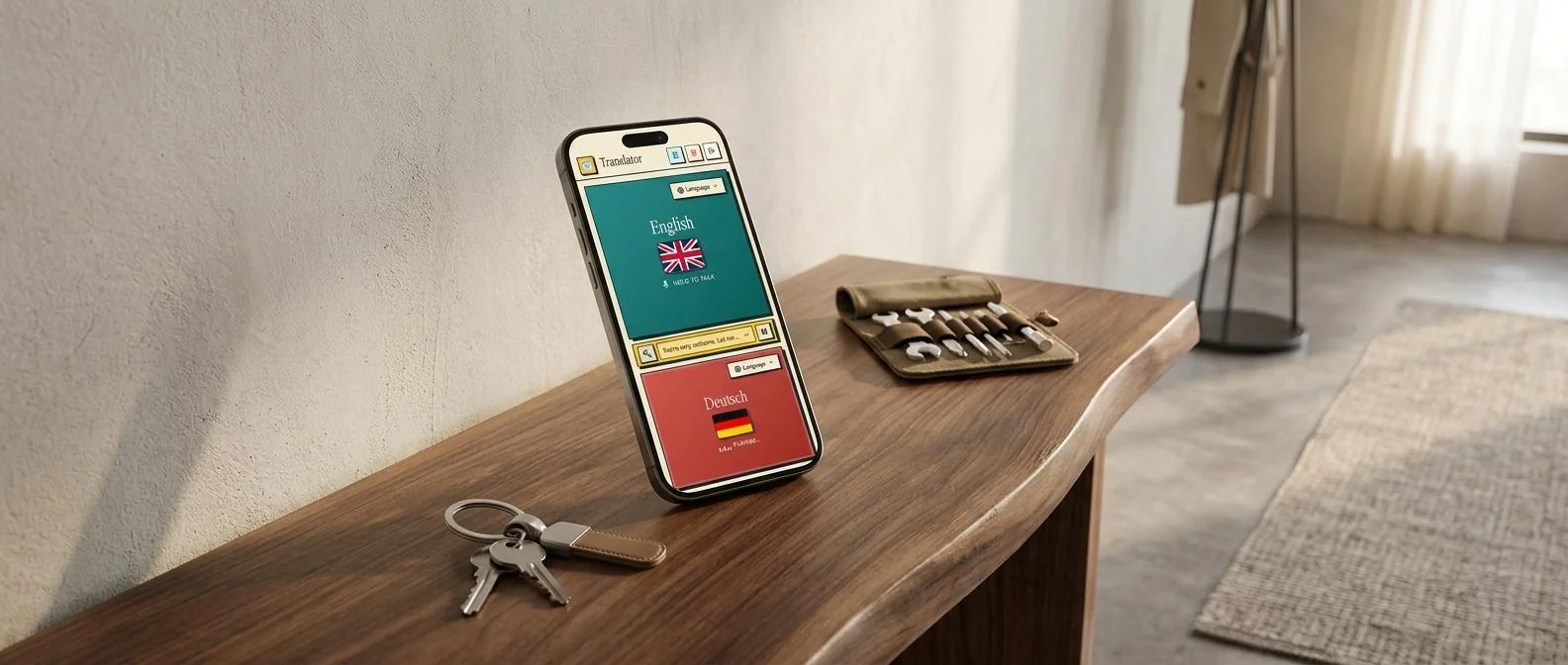
When you knock on your neighbor's door, using a dedicated voice translation tool in fullscreen mode allows both of you to speak at a comfortable distance and read the translated conversation with complete clarity.
Pallie Voice Translator ensures your polite tone and constructive solution are translated with natural, courteous phrasing.

Spoken Example: Asking a Neighbor to Lower TV Volume
Listen to a courteous neighborly request in English and German:
“Hi neighbor, could you turn down the television volume a little after 10 in the evening? The walls are quite thin.”
“Entschuldigen Sie bitte, das war mir nicht bewusst. Ich werde abends Kopfhörer benutzen.”
Cultivating a friendly neighborhood community
Strong communities are built on mutual consideration. When you handle occasional noise or hallway issues with patience, a warm smile, and spoken voice translation, you turn neighbors into friends and create a peaceful, welcoming home.
Resolve neighbor disputes with warmth. Pallie translates and speaks out loud with polite, respectful phrasing.
Open Pallie Translator