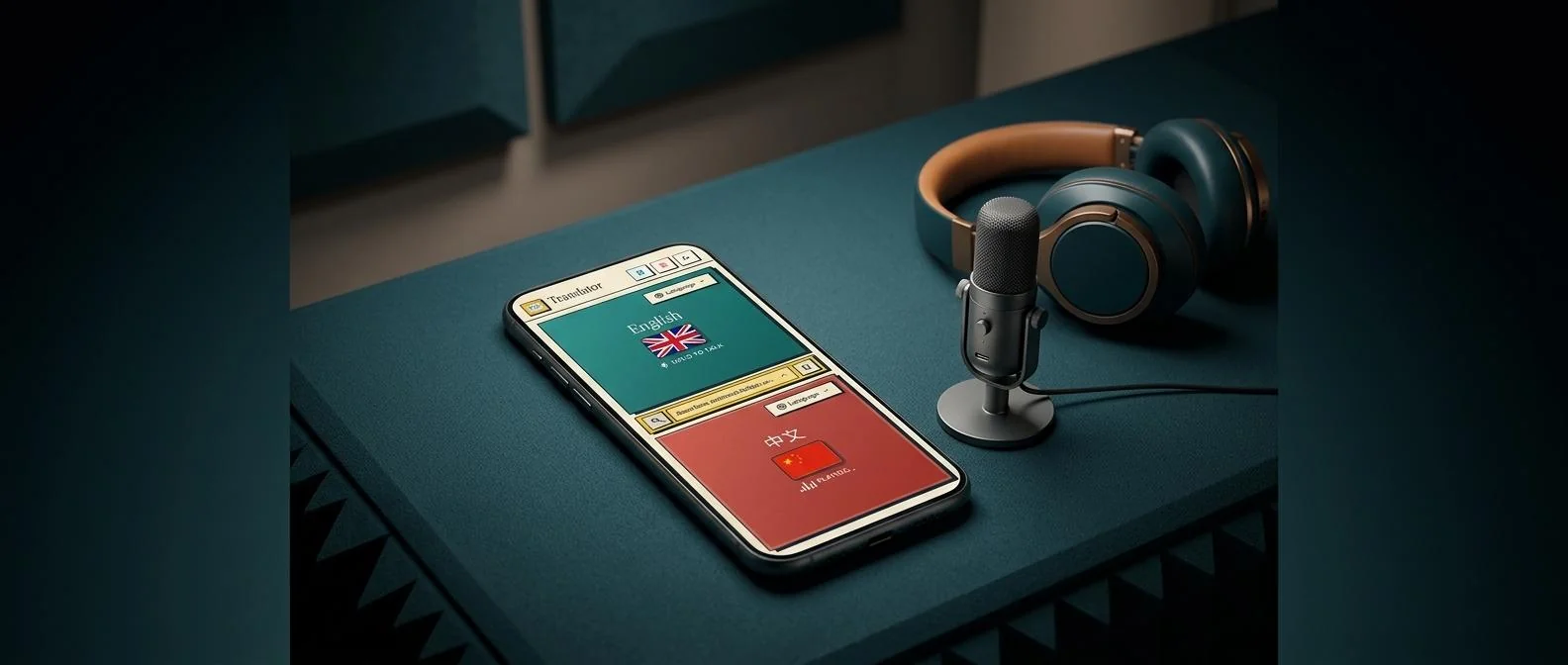
Multilingual Nanny Safety & Emergency Guide
How to convey precise medication dosages, food allergy precautions, daily shift logs, and 911 emergency protocols to non-English speaking nannies.
- Write medication amounts in milliliters on physical syringes. Never rely on vague verbal terms like 'one spoonful.' Mark exact lines on the dosing syringe to prevent accidental overdoses.
- Keep a bilingual emergency binder in the kitchen. Provide physical copies of your home address, emergency contacts, pediatrician phone number, and medical consent forms in Spanish.
- Use structured shift logs and voice translation. Standardized checkboxes for naps and meals eliminate narrative translation errors, while voice translation clarifies urgent questions.
Leaving your child in the care of a trusted nanny requires total confidence. When your caregiver speaks Spanish or another native language, daily communication about bottle amounts, nap windows, fever medicine, and emergencies must be structured with absolute precision.
Emergency protocols must never rely on memory or verbal translation during a crisis. Clear visual logs, marked medical dispensers, and bilingual emergency cards ensure instant clarity.
How to communicate medication dosages safely
Pediatric medication errors in home care often occur due to metric versus imperial confusion (e.g., teaspoons versus milliliters) or ambiguous verbal instructions.
Follow this four-point pediatric safety protocol:
- Mark the syringe with a permanent line: Use red tape or a waterproof marker to highlight the exact dosage line (e.g., 5 ml) on the oral dispenser.
- Print a bilingual medication table: Detail the medicine name, symptom threshold (e.g., fever above 38°C / 100.4°F), exact amount, and minimum hours between doses.
- Confirm with the teach-back method: Have the nanny show you the marked dispenser and repeat the protocol in her own words.
- Require a text confirmation before dosing: Ask for a quick photo of the drawn syringe before administering medicine to your child.
The bilingual emergency action binder
During a home emergency, panic and language stress can make remembering English street names impossible. Keep a bright red binder by the kitchen entrance containing these translated documents:
| Document Name | Spanish Translation Header | Key Information Included | Why It Is Critical |
|---|---|---|---|
| Home Address & 911 Script | Dirección del Hogar y Llamada de Emergencia | Exact street, apartment number, cross streets, and phonetic 911 script. | Allows non-fluent caregivers to read the address verbatim to 911 operators. |
| Parent & Emergency Contacts | Contactos de Emergencia | Parents' work and mobile numbers, trusted bilingual neighbor, pediatrician. | Guarantees rapid backup if parents cannot be reached immediately. |
| Medical Treatment Authorization | Autorización de Tratamiento Médico | Signed legal consent granting emergency room staff permission to treat. | Prevents hospital intake delays when parents are commuting home. |
| Severe Allergy Action Plan | Plan de Acción para Alergias Severas | EpiPen photo tutorial, banned foods list, and emergency symptoms. | Eliminates hesitation during an acute anaphylactic reaction. |
The daily shift log: replacing paragraphs with checkboxes
Expecting a bilingual nanny to write long daily journal entries in English creates unnecessary stress and often leads to missed details:
Unstructured Text Notes (High Confusion)
- Narrative paragraphs: Hard to skim quickly during busy evening handovers.
- Grammar anxiety: Nanny feels self-conscious about writing in English.
- Ambiguity: Missed timestamps on diaper changes or medicine administration.
Standardized Grid Log (High Clarity)
- Visual checkboxes: Fast, universal recording of meals, naps, and outdoor time.
- Exact timestamps: Clear recording of medication hours and bottle volumes.
- Zero language friction: Spanish and English column headers.
Real-time safety checks with voice translation
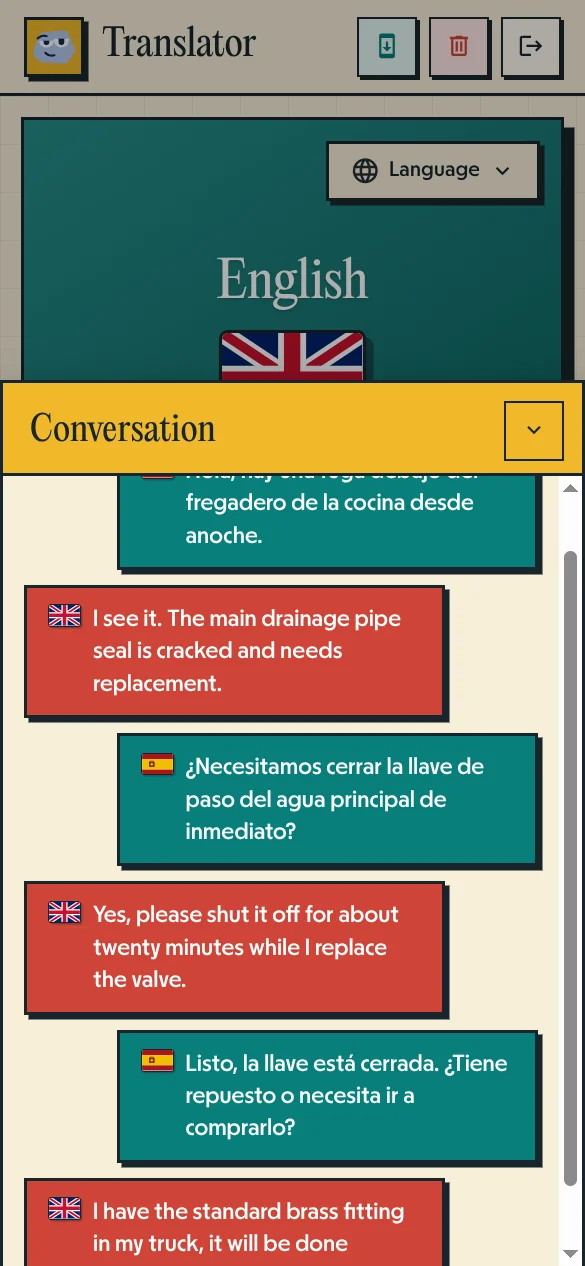
When your nanny notices an unexpected rash, a change in toddler appetite, or a minor playground bump, she can ask you directly using spoken voice translation without waiting for an end-of-day summary.
Pallie Voice Translator keeps a clear conversation history, giving parents and caregivers a documented log of health updates and instructions.
Spoken Example: Giving Fever Medication Instructions
Listen to a clear childcare safety directive in English and Spanish:
“If Liam gets a fever above 38 degrees, give him 5 ml of this syrup and call me immediately.”
“Entendido perfectamente, apunto la dosis y le aviso de inmediato si sube la temperatura.”
Empowering your childcare partnership
A great nanny is an invaluable partner in raising your children. By putting clear visual safety systems, standardized shift logs, and spoken voice translation in place, you create a safe, supportive environment where both your child and your caregiver thrive.
Ensure total safety in your home. Pallie translates and speaks out loud with crystal-clear pediatric phrasing.
Open Pallie Translator