Communicating with Domestic Help & Contractors
How to manage household employees, housekeepers, nannies, and renovation crews with crystal-clear communication, safety protocols, and mutual dignity.
- Move from one-way commands to two-way dialogue. High power distance makes workers reluctant to ask questions. Create psychological safety by encouraging questions and using teach-back checks.
- Standardize safety and task expectations in writing. Bilingual employment contracts, visual GHS safety pictograms, and daily checklists eliminate ambiguity and protect both parties.
- Use spoken voice translation for exact specifications. Explain tile patterns, plumbing fixtures, medication dosages, and schedules in real time using clear push-to-talk voice translation.
The private home is a unique workplace. Whether you are employing a full-time nanny, a weekly housekeeper, or a crew of renovation contractors, language barriers can easily lead to costly miscommunications, safety hazards, and unnecessary friction.
Respectful household management requires two-way clarity. When employers replace hand gestures with clear bilingual agreements and spoken voice tools, workers feel valued and tasks are executed flawlessly.
Why does the “Yes Trap” happen in domestic work?
Homeowners often ask: “Did you understand everything?” and receive an immediate nod and smile, only to discover later that the task was done incorrectly.
This happens because many domestic workers come from high power-distance cultures(such as Mexico, the Philippines, or Central America). Admitting confusion or saying “no” to an employer can feel disrespectful or risk job security.
To break this pattern, use the teach-back method: “Let us walk through the bathroom together so we can confirm which tiles to remove first.”
High-context vs. low-context communication in the home
Understanding your worker's cultural communication style prevents friction and builds mutual trust:
| Communication Dimension | Low-Context Employer (US / UK / Germany) | High-Context Worker (Latin America / SE Asia) | Best Practice Bridge |
|---|---|---|---|
| Giving Feedback | Direct, literal critique focused purely on the task. | Direct criticism feels like a personal attack and loss of face. | Sandwich method: Pair constructive feedback between warm appreciation statements. |
| Task Instructions | Detailed written bullet points with strict deadlines. | Prefers visual demonstrations, personal guidance, and hands-on walkthroughs. | Show-and-point: Physically demonstrate the task while speaking simple phrases. |
| Expressing Hesitation | Expects open verbal disagreement if something is wrong. | Signals discomfort through silence, averted eye contact, or slight hesitation. | Active check-ins: Pause and ask: “What do you think is the best way to do this?” |
Workplace safety: chemical and electrical hazards
Household chemical mixing and power tool operation carry real risks. The Occupational Safety and Health Administration (OSHA) requires employers to convey hazards in a language workers fully comprehend.
High-Risk Communication (Unsafe)
- Vague verbal warnings: “Be careful with those blue bottles in the cabinet.”
- Assumed literacy: Leaving English warning labels on bleach and ammonia.
- Informal overtime: Asking for “a few extra minutes” without tracking pay.
Standardized Protocols (Safe & Legal)
- GHS hazard pictograms: Visual flame and corrosion symbols on all chemicals.
- Bilingual safety labels: Clear Spanish instructions warning against mixing bleach.
- Documented hours: Digital time-tracking that respects rest breaks and overtime.
5 protocols for smooth contractor and domestic management
Implement these practical steps to keep your household running smoothly:
- Sign a bilingual agreement: Define hours, exact compensation, task checklists, and notice periods in both English and Spanish.
- Use visual checklists: Post laminated room checklists with simple icons for dusting, vacuuming, and trash disposal.
- Provide marked measurements:When working with contractors, write exact measurements on blue painter's tape directly on the walls or countertops.
- Schedule dedicated check-in times: Avoid shouting instructions during rush hours; hold a calm 5-minute morning review.
- Use two-way voice translation: Use a real-time voice translator for daily questions, plumbing issues, and schedule changes.
Fair Employment Standard: Under the Domestic Workers Bill of Rights, domestic staff are entitled to safe working conditions, guaranteed rest breaks, and written contracts in their primary language. Fair treatment creates dedicated, long-term partnerships.
On-site coordination with voice translation
When you need to discuss plumbing repairs, electrical wiring, or daily cleaning priorities with your crew, relying on fragmented hand gestures can cause expensive mistakes.
Pallie Voice Translator lets you explain the exact repair plan in English and speaks it aloud in clear, professional Spanish.
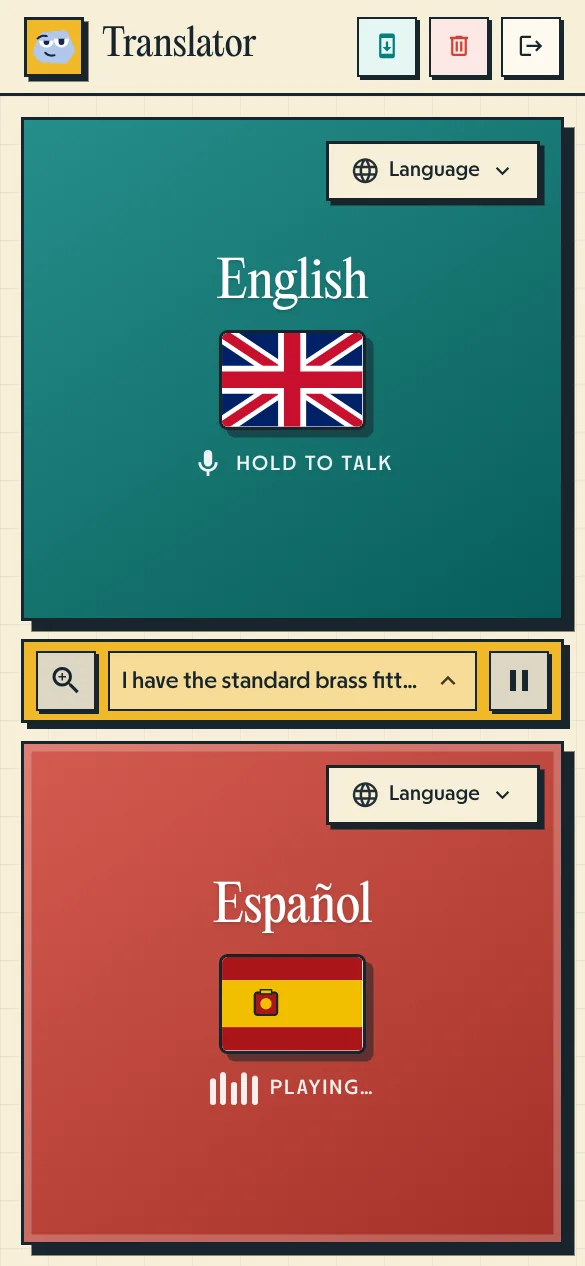
Spoken Example: Reviewing Morning Contractor Tasks
Listen to a clear contractor coordination dialogue in English and Spanish:
“Good morning. We'd like to focus on fixing the bathroom tile and checking the drain pipe today.”
“Buenos días. Primero revisaré la tubería principal para asegurarme de que no haya fugas ocultas.”
Building professional respect in the home
Managing household help across languages is not just about getting tasks completed; it is about cultivating an environment of dignity, safety, and mutual appreciation.
When you provide clear bilingual contracts, prioritize physical safety, and communicate through spoken voice translation, you build an enduring relationship grounded in trust and excellence.
Communicate clearly with household staff. Pallie translates and speaks out loud instantly in Spanish and English.
Open Pallie Translator