Humor & Intimacy in Bilingual Relationships
How to share laughs, create private inside jokes, and express emotional warmth when cultural humor and puns don't translate literally.
- Humor requires cultural translation, not literal words. Puns and dry sarcasm often land awkwardly. Explain the cultural backstory with curiosity rather than frustration.
- Build your own relational micro-culture. Turn mistranslations and quirky language mishaps into shared inside jokes and private nicknames.
- Learn terms of endearment in their native tongue. Native romantic phrases connect directly to childhood emotional resonance, deepening emotional safety.
Humor is the spark that makes dating feel effortless. But when you and your partner speak different languages, wit is often the first thing to get lost. A clever pun in French falls completely flat in English, and dry sarcasm can accidentally sound like a sharp criticism.
You do not need shared fluency to share laughter. The strongest cross-language couples build their own private language of inside jokes, playful callbacks, and cultural curiosity.
Why does cultural humor fail in literal translation?
Humor relies on subtext, double meanings, timing, and shared cultural references.
For example, in French culture, playful banter and light teasing (l'esprit caustique) are common ways to show interest and intelligence. But to someone from a culture that values direct, earnest praise, the same teasing can feel cold or critical.
When a joke does not land, resist the urge to feel embarrassed. Treat it as an invitation to explain: “In my culture, that is a playful tease because...”Explaining the joke often generates more warmth and laughter than the punchline itself.
The power of private nicknames and relational idioms
Sociolinguists find that couples develop relational idioms: private phrases, nicknames, and playful words that only the two of them understand.
In cross-language relationships, these idioms often originate from funny translation accidents. A mispronounced grocery item or an amusing auto-correct error becomes a lifelong romantic callback.
Standard Cultural Jokes
- High risk: Heavy reliance on local pop culture or untranslatable puns.
- Exclusion danger: One partner is left feeling uninformed or disconnected.
- Awkward timing: The punchline requires a long preamble.
Couple-Created Micro-Humor
- Zero risk: Grounded in shared real-world moments and funny memories.
- High intimacy: Validates the unique bond you have built together.
- Instant shorthand: A single word brings immediate smiles and laughter.
Emotional resonance: the “language of the heart”
Psycholinguists have long observed that words learned in childhood carry distinct emotional weight. When a native French speaker hears “je t'aime” or “mon trésor,” the words trigger visceral feelings of safety and comfort.
Even if your primary conversation is in English, incorporating your partner's native terms of affection creates profound emotional resonance:
| Affection Type | Literal Meaning | Emotional Context | Why It Lands Deeply |
|---|---|---|---|
| Mon cœur (French) | “My heart” | Deep romantic devotion and emotional centering. | Directly expresses that the partner holds your emotional core. |
| Mon trésor (French) | “My treasure” | Cherished value and profound protective care. | Communicates that your presence is precious and valued. |
| Ma puce / Mon chou (French) | “My little flea” / “My sweet pastry” | Playful, gentle teasing endearment. | Brings lighthearted tenderness into everyday routine. |
| Inside Nickname (Hybrid) | Unique couple creation | Shared history and translation mishap humor. | Reminds you both of your private world and shared history. |
5 strategies for keeping romantic banter alive
Use these practical techniques to keep dates fun, spontaneous, and emotionally close:
- Ask for the double meaning:When your partner laughs at a phrase in their language, ask cheerfully: “What is the pun there? Teach me why that is funny.”
- Send spontaneous audio notes: Send quick 10-second voice notes with gentle teasing, a funny observation, or a sweet goodnight in their language.
- Celebrate translation slips: When a voice app makes an absurd translation error, laugh together and adopt the silly phrase as a temporary nickname.
- Pair verbal jokes with physical touch: A gentle touch on the hand or shoulder ensures your playful intent is felt, even if the phrasing is imperfect.
- Review conversation history together: Pull up past translated exchanges and reminisce on how your shared communication has evolved.
Gottman Principle: Stable relationships maintain a 5:1 ratio of positive to negative interactions. When words require effort, small acts of affection—making coffee, sharing a smile, holding hands—ensure your emotional bank account stays full.
Sharing jokes directly with voice translation
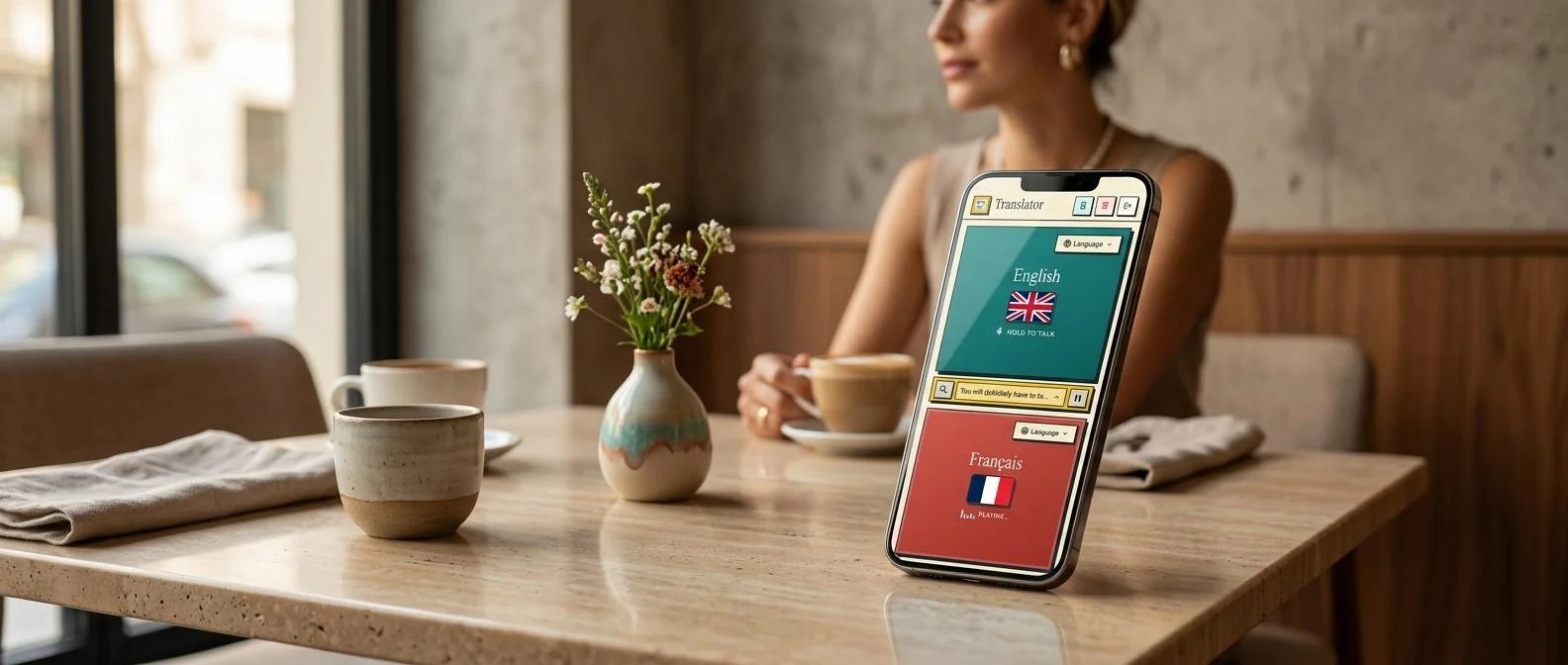
When you want to share a funny childhood anecdote or a quirky story from your day, do not let vocabulary limits stop you. Handing your partner a dedicated voice translation tool lets you tell the full, colorful story with natural nuance.
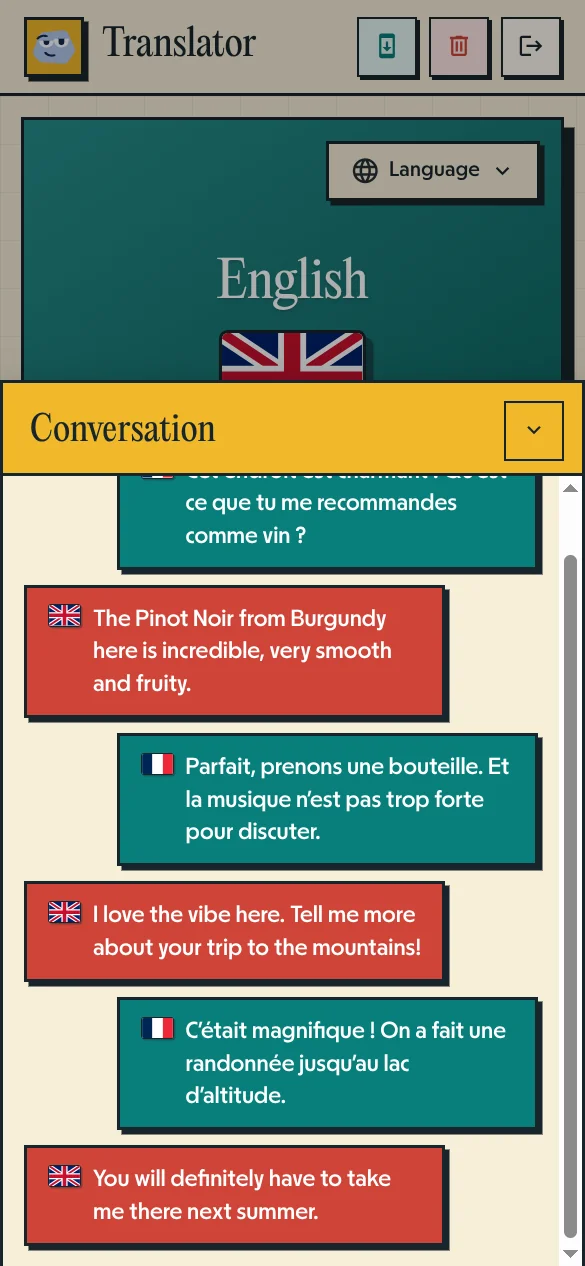
Pallie Voice Translator records your conversation history, allowing both of you to re-read and revisit the funny exchanges and sweet moments you shared over dinner.
Spoken Example: Asking About a French Pun
Listen to natural playful banter in English and French:
“Wait, was that a pun in French? You have to explain the double meaning to me.”
“C'est un jeu de mots un peu bête, mais ça me fait toujours rire aux éclats.”
Building a resilient romantic bond
True intimacy is not about speaking without flaws. It is about the shared joy of being understood by someone who cares enough to listen through the pauses, the translations, and the laughter.
When you approach your language gap with humor and curiosity, every conversation becomes an adventure that draws you closer together.
Share jokes and stories effortlessly. Pallie translates and speaks out loud with natural inflection.
Open Pallie Translator