Dating Someone with a Language Barrier
How to build genuine emotional intimacy, manage foreign language anxiety, and stay close when you don't share a fluent native tongue.
- Mental exhaustion is cognitive, not emotional. Translating continuously drains working memory. Give each other grace when energy dips during long dates.
- Build a shared micro-culture through translanguaging. Blend words from both languages, establish private nicknames, and use voice notes to keep conversations playful.
- Use push-to-talk voice translation for deep storytelling. Do not let vocabulary gaps stop you from sharing meaningful personal stories. Voice translation bridges complex narratives effortlessly.
Dating someone when you do not share a fluent common language is exhilarating, intense, and occasionally exhausting. Early dates are fueled by chemistry, laughter, and hand gestures. But as you look to build deep intimacy, basic vocabulary gaps can make expressing your full personality, humor, and emotions feel like hard work.
A language barrier forces couples to slow down and listen with complete presence. When supported by empathy and voice translation tools, cross-language dating builds unusually strong emotional attunement.
Why does speaking a partner's language cause cognitive overload?
When you converse in your native language, speech is automatic. In a second language, your brain works overtime: retrieving vocabulary, parsing grammar, and monitoring pronunciation.
Psychologists call this Foreign Language Anxiety (FLA). When you want to impress someone on a date, the fear of sounding simple or misunderstanding a question adds physiological stress.
After two hours of intense focus over dinner, the non-native speaker often experiences mental depletion. If unrecognized, this cognitive fatigue can look like boredom or emotional detachment.
The 3 stages of cross-language romantic growth
Couples who navigate language gaps successfully adapt their communication as their bond matures:
| Relationship Stage | Primary Challenge | Dominant Strategy | Intimacy Outcome |
|---|---|---|---|
| 1. Early Dating | Limited vocabulary, high Foreign Language Anxiety, fear of awkward silences. | Real-time voice translation apps, expressive body language, short stories. | High excitement, curiosity, and non-verbal chemistry. |
| 2. Relationship Formation | Expressing humor, emotional nuance, and personal history. | Translanguaging, private inside jokes, asynchronous voice notes. | Growing mutual trust and creation of a unique couple dialect. |
| 3. Long-Term Commitment | Conflict resolution, financial alignment, and deep values. | Active language learning, scheduled communication check-ins, structured patience. | Deep emotional commitment; partner's tongue becomes the “language of the heart.” |
What is “translanguaging” in romantic relationships?
Linguists find that successful bilingual couples do not strictly isolate languages into rigid boxes. Instead, they practice translanguaging: freely weaving together words, idioms, and slang from both tongues to create a shared dialect.
You might use an English sentence with a French term of endearment like mon chou, or borrow a cultural concept that has no single English equivalent. This blend creates an intimate conversational shorthand unique to your partnership.
Rigid Single-Language Rule
- High pressure: One partner constantly struggles to maintain 100% fluency.
- Student-teacher trap: The native speaker turns into an impromptu grammar coach.
- Emotional barrier: Complex stories get cut short due to vocabulary limits.
Translanguaging & Voice Tools
- Low pressure: Mix languages freely without fear of mistakes.
- Romantic parity: Both partners stay equal conversational peers.
- Deep storytelling: Voice translation bridges complex narratives instantly.
Why voice notes and voice translation outperform text messages
Text messages strip away vocal tone, warmth, and inflection. In a cross-language relationship, a short text can easily be misread as cold or passive-aggressive.
Voice notes and live voice translation maintain the emotional cadence of speech:
- Vocal prosody conveys emotion:Hearing your partner's laughter and gentle tone prevents misunderstandings.
- Low-pressure composition: Voice notes let the speaker take their time to articulate thoughts clearly.
- Instant spoken feedback: Live push-to-talk translation speaks words aloud naturally, preserving eye contact and spontaneous connection.
Date Night Tip: When sitting in a noisy restaurant or bar, background chatter over 78 dB makes hearing a foreign language twice as hard. Sit side-by-side or hold the voice translator between you so every sentence comes through clearly.
Using voice translation for face-to-face dates
Rather than letting a language barrier keep conversations surface-level, modern push-to-talk voice translation lets you dive into deep topics: your childhood memories, your life ambitions, and your daily feelings.
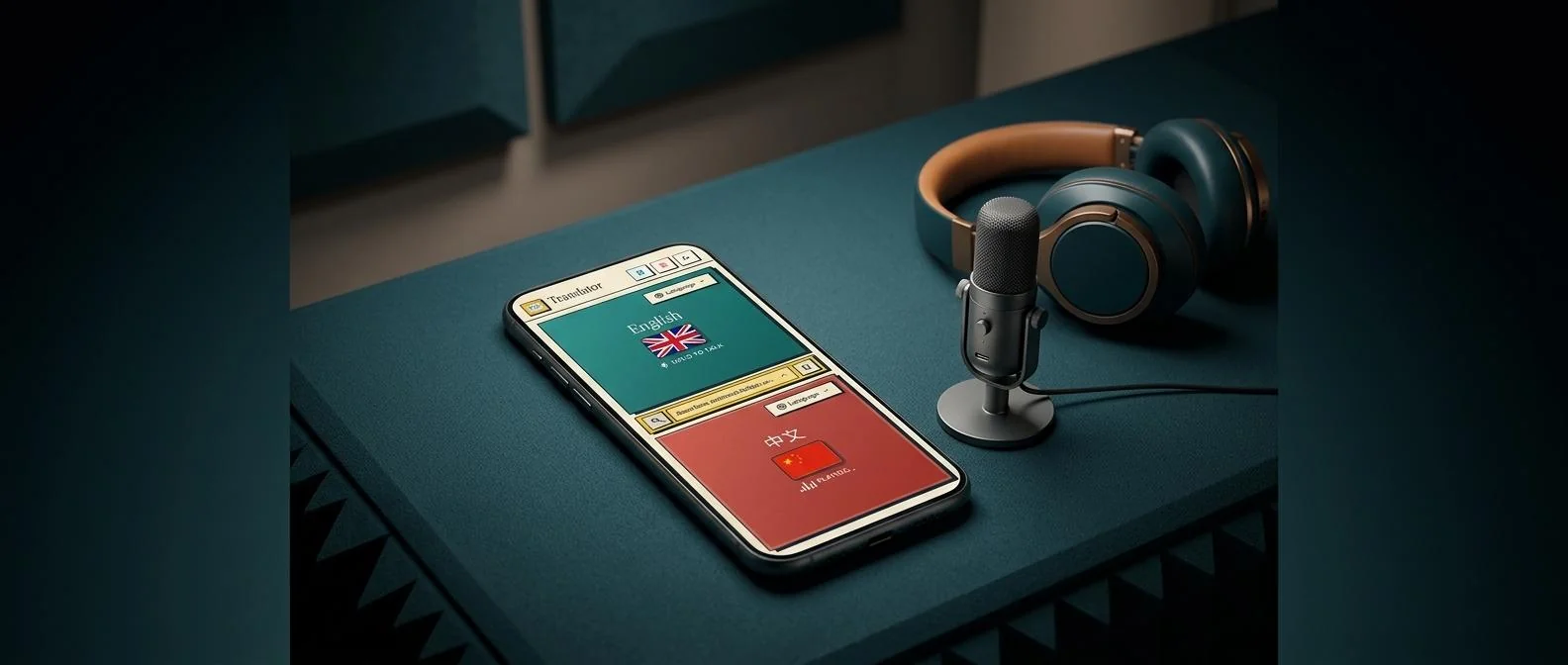
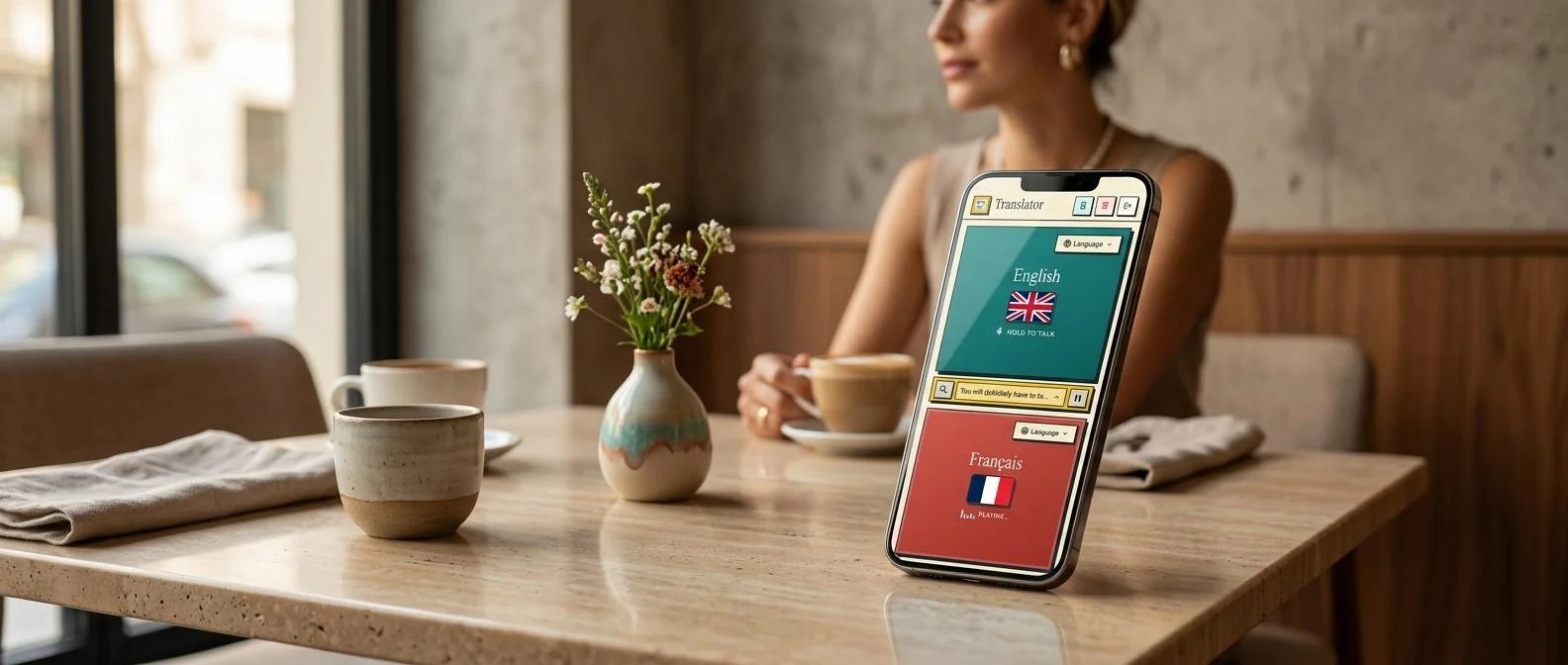
With Pallie Voice Translator, both partners hold their own button and talk naturally. The app translates in real time and plays natural spoken audio with clear pronunciation.
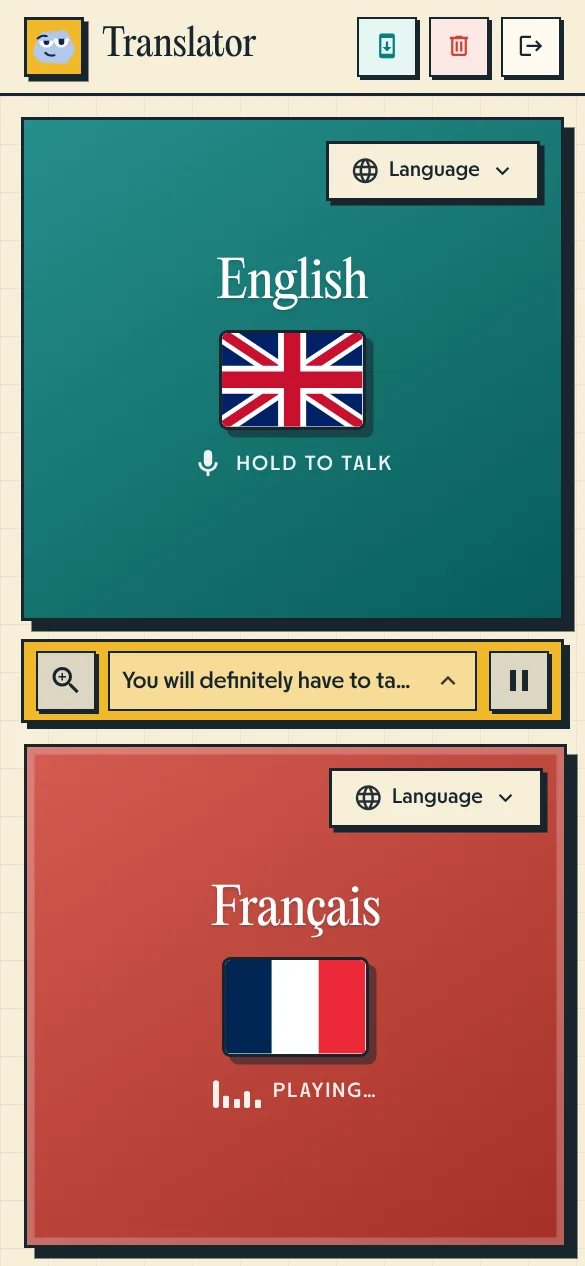
Spoken Example: Sharing Meaningful Stories on a Date
Listen to natural romantic dialogue in English and French:
“Aw I really loved the story about your hometown. You have such a great way of describing things.”
“C'est gentil. Parfois, j'ai peur de perdre les nuances, mais c'est tellement facile de te parler.”
Nurturing long-term love across cultures
Language is the bridge, but empathy is the foundation. As your relationship deepens, committing to learning each other's mother tongue shows deep respect and dedication.
Celebrate the small victories: the first inside joke that lands, the first time you understand a story without translating, and the unique intimacy that comes from creating a shared world together.
Speak naturally in your native language. Pallie translates and speaks out loud instantly across the table.
Open Pallie Translator