Communicating at Salons & Shops Abroad
How to explain haircut lengths, specify layers, order by weight at butcher shops, and negotiate politely at local bakeries.
- Anchor haircut lengths to physical anatomical points. Point to cheekbones, earlobes, or collarbones and specify exact clipper guard numbers (e.g., #3 guard = 10 mm).
- Learn standard metric shopping weights. Order cheese, olives, and meats in grams (250g, 500g) rather than vague terms like 'a small piece.'
- Use spoken voice translation for mid-service checks. Check in with your barber or shopkeeper during the process to confirm lengths and details before the final cut.
Getting a haircut in a foreign country or walking into a local neighborhood bakery is one of the best ways to experience everyday culture. But without the right vocabulary, explaining how much hair to trim or ordering specific cuts of meat can feel daunting.
Vague words like “just a little” mean different things across cultures. Pairing visual markers with spoken voice translation ensures your stylist or shopkeeper delivers exactly what you want.
Hair salon terminology: English and Turkish
Master these core salon terms to communicate your style clearly to a local barber or hairdresser (*kuaför*):
| English Salon Term | Turkish Term | Literal Meaning | What to Point To |
|---|---|---|---|
| Just a Trim | Sadece uçlarından / Kısaltma | Shorten just the ends | Hold up fingers showing 1–2 cm of length. |
| Short on Sides | Yanları kısalt | Shorten the sides | Point to temples and around the ears. |
| Keep Length on Top | Üst kısmı uzun bırak | Leave the top part long | Grasp hair on crown of head. |
| Fade / Taper | Kademeli tıraş / Degrade | Gradual taper cut | Show clipper fade lines on back of neck. |
| Layers / Texture | Kat kat kesim | Layered cut | Ruffle hair to show movement. |
The 3-step salon communication protocol
Avoid salon surprises by following this structured walkthrough:
What Leads to Bad Haircuts
- Assuming photo speaks for itself: Showing a photo with totally different hair density.
- Staying silent: Not speaking up when the barber cuts too short.
- Vague descriptors: Saying “make it look modern.”
What Delivers Perfect Results
- Clear photos + guard numbers: “Number 3 on sides, scissor cut on top.”
- Mid-cut check-in: Pausing after 5 minutes to verify the length in the mirror.
- Spoken voice translation: Explaining exact styling preferences in Turkish.
Shopping in local markets and bakeries
In traditional neighborhood shops, transactions operate on warmth and personal recognition:
- Greet upon entering:Say “Kolay gelsin” (May it come easy) or “Merhaba” (Hello) to the shopkeeper.
- Use metric weights: Ask for yarım kilo (500g) of olives or bir porsiyon(one portion) of fresh pastry.
- Point and smile: Point to items in the display case and let the shopkeeper confirm the item.
- Thank with local courtesy:Say “Teşekkür ederim” (Thank you) and “İyi günler” (Have a nice day) upon leaving.
Confirming styling details with voice translation
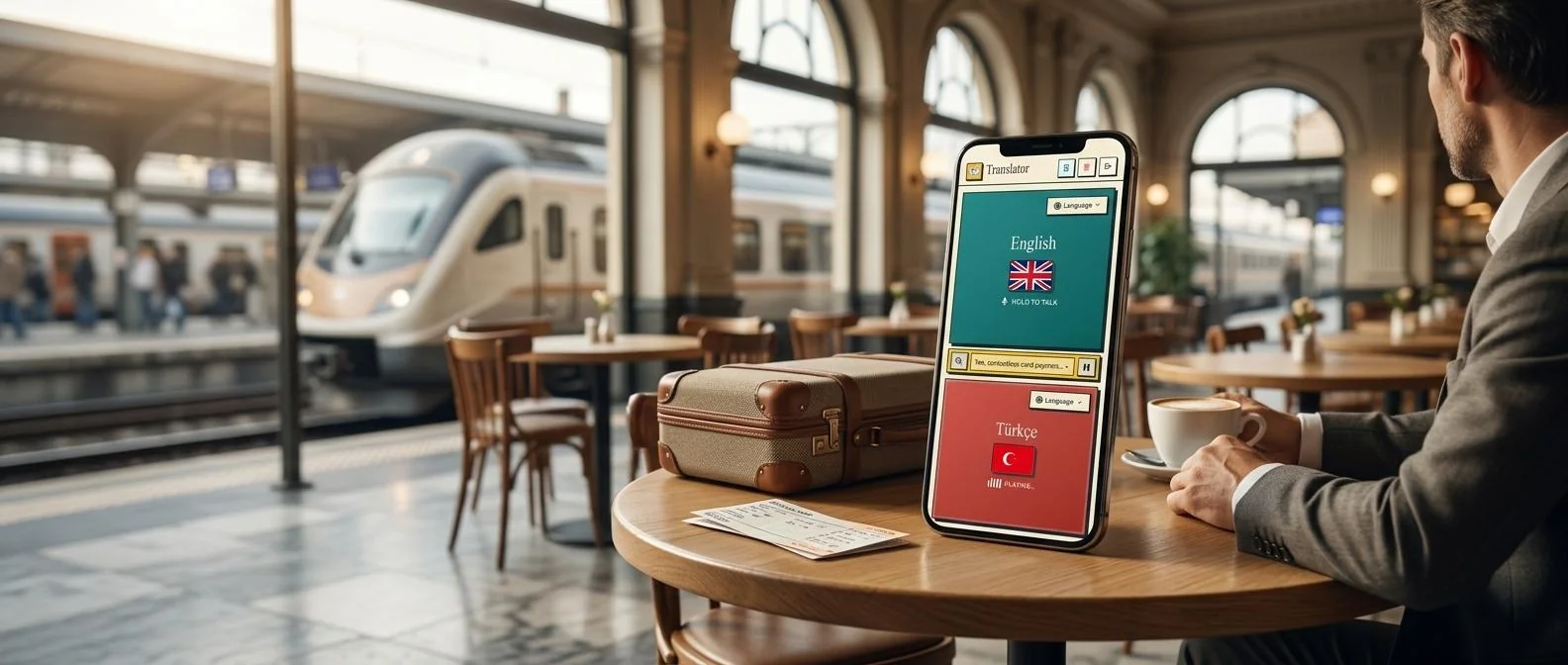
When you sit in the barber chair, using a dedicated voice translation tool allows you to explain your preferred length and neckline taper with complete confidence.
Pallie Voice Translator allows you and your stylist to review past instructions, ensuring you leave the salon looking and feeling great.

Spoken Example: Explaining Haircut Lengths at a Salon
Listen to a clear salon haircut request in English and Turkish:
“I just want a slight trim on the sides, and keep the length on top, please.”
“Anladım. Yanları hafifçe kısaltıp üst kısmı doğal bırakıyorum.”
Enjoying local neighborhood life
Mastering small everyday service interactions unlocks the true charm of living or traveling abroad. When you combine basic courtesy with voice translation tools, every haircut, bakery visit, and market errand becomes a delightful cultural exchange.
Get the exact service you want. Pallie translates styling instructions into natural spoken Turkish and 100+ languages.
Open Pallie Translator