First 48 Hours: Host Family Communication Guide
A complete arrival onboarding playbook for host families covering house tours, food inventories, bathroom protocols, and safety basics.
- Keep arrival evening quiet and low-pressure. Provide food, Wi-Fi, and a quiet bedroom. Save long conversations and house rules for Day Two after a full night of rest.
- Conduct a hands-on physical house walk-through. Physically demonstrate appliances, shower controls, door locks, and heating rather than relying purely on verbal explanations.
- Use visual food preference sheets and voice translation. Let students check preferred breakfast items and communicate daily comfort needs without awkwardness.
The first 48 hours set the tone for an entire exchange year. Your student arrives tired, jet-lagged, and anxious about speaking a second language full-time. Having a clear, calm onboarding roadmap removes guesswork and helps your student feel secure from day one.
Do not overwhelm your student with complex family histories or 20 house rules on arrival night. Focus on basic physical comfort first, logistics second, and deep connection third.
Hour 0 to 12: Arrival night and decompression
After a 14-hour international flight and customs lines, your student's cognitive energy is drained. Follow this gentle arrival checklist:
- Provide a warm, simple meal: Offer light soup, pasta, or rice with tea or water. Avoid forcing heavy multi-course dinners.
- Hand over the Wi-Fi card: Give them a printed card with the home Wi-Fi name and password so they can message their parents that they arrived safely.
- Show essential bedroom basics: Point out the bed, clean towels, extra blankets, drinking water, and bathroom location.
- Say goodnight early: Encourage them to sleep without feeling obligated to stay up chatting with the family.
Hour 12 to 24: First morning and food preferences
Many international students are too polite to ask for food or explore the refrigerator alone. On the first morning, establish an open-kitchen policy:
What Causes Student Anxiety
- Waiting to be offered: Sitting hungry in their room because they do not want to intrude.
- Unfamiliar foods: Worrying about offending the host family by disliking a dish.
- Complex kitchen appliances: Fear of breaking an unfamiliar coffee maker or stove.
How to Put Them at Ease
- Open-access counter: Leave bread, fruit, tea, and cereals out on the counter.
- Visual food inventory: Have them mark favorite ingredients on a printed sheet.
- Hands-on demo: Show how the kettle, microwave, and toaster work together.
Hour 24 to 48: The physical house and safety tour
On Day Two, after your student has had a good night's sleep, walk through the house together and explain practical routines:
| Area | Common Misunderstandings | Demonstration Protocol | Spoken Script Example |
|---|---|---|---|
| Shower & Bath | Different hot/cold water mixers; water splashing onto unsealed floors. | Turn on the shower together; explain the curtain and bathroom vent fan. | “Turn this knob left for hot water. Keep the curtain inside the tub.” |
| Laundry Machine | Different detergent types (pods vs. powder) and cycle settings. | Run a small practice load together and show the hamper location. | “Put one detergent pod in the drum, then press the Normal cycle button.” |
| Door Locks & Keys | Deadbolts that require turning a latch or specific electronic keypads. | Practice locking and unlocking the front door twice. | “Here is your house key. Turn it twice to the right to lock the deadbolt.” |
| Emergency Exits & Alarms | Unfamiliar smoke detector sounds and emergency meeting spots. | Show fire extinguisher location and agree on an outside meeting tree. | “If the alarm beeps, we all meet outside by the big oak tree.” |
Bridging daily logistics with voice translation
When you need to explain how the heating works or ask about breakfast preferences, using a spoken voice translation tool ensures both sides understand every detail without confusion.
Pallie Voice Translator allows host families to maintain a conversation history, so both host parents and students can check past instructions on breakfast, pickup times, and household schedules.
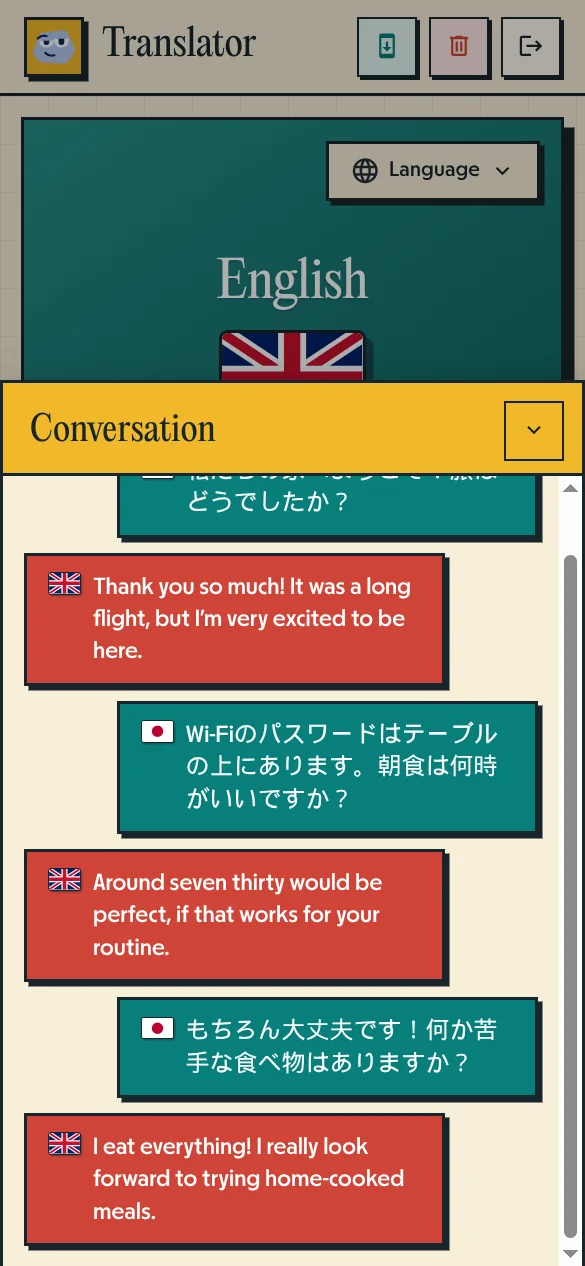
Spoken Example: Explaining Breakfast on the First Morning
Listen to a friendly morning routine exchange in English and Japanese:
“Breakfast is ready on the kitchen counter whenever you wake up. Help yourself to anything in the fridge.”
“ありがとうございます。朝はトーストと緑茶をいただきます。”
Setting up for a successful year ahead
The first 48 hours are about creating safety, comfort, and predictable routines. When your student sees that you are patient, organized, and willing to bridge language gaps with voice tools, their anxiety melts away.
Celebrate this initial milestone together. With a solid foundation in place, your student is ready to embark on an unforgettable, transformative exchange experience.
Ensure clear household onboarding. Pallie translates and speaks out loud with natural bilingual audio.
Open Pallie Translator