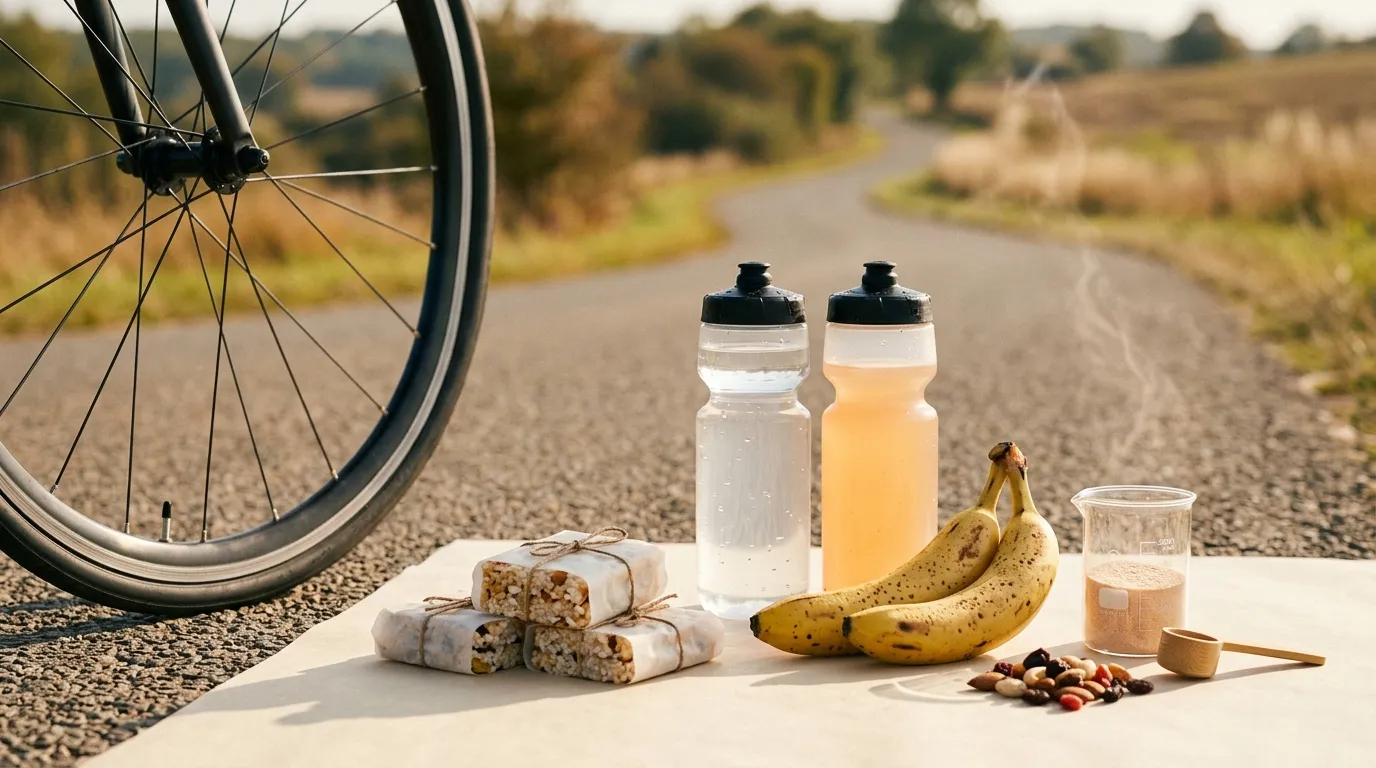
Muscle glycogen stores support roughly 90 to 120 minutes of intense cycling. On rides exceeding two hours, consuming exogenous carbohydrates preserves power output, delays central nervous system fatigue, and prevents severe blood glucose crashes (the "bonk").
How many carbohydrates per hour should you eat?
Carbohydrate absorption is limited by intestinal transport proteins. Single-source glucose saturates the SGLT-1 transporter at 60 grams per hour (1 g/min). Ingesting more than 60 g/hr of glucose alone causes unabsorbed sugars to pool in the gut, drawing water via osmosis and inducing bloating and diarrhea.
To exceed 60 g/hr, sports scientist Dr. Asker Jeukendrup validated multiple transportable carbohydrates: combining glucose with fructose utilizes the parallel GLUT-5 fructose transporter.
| Ride Duration | Carbohydrate Target | Carbohydrate Ratio | Primary Source Formats |
|---|---|---|---|
| Under 60 min easy | None required | — | Water, normal daily diet |
| 1.0–2.5 hours | 30–60 g/hr | Single source (glucose / maltodextrin) | Sports drink, gels, bananas, chews |
| Over 2.5 hours (Century) | 60–90 g/hr | 2:1 (Glucose to Fructose) | Dual-source drink mixes & gels |
| High-Output / Elite | 90–120 g/hr | 1:0.8 (Glucose to Fructose) | Gut-trained hydrogel formulas |
How do you train your gut for high carbohydrate intake?
The human gut is highly adaptable. Consistently consuming carbohydrates during exercise upregulates SGLT-1 and GLUT-5 transporter density, accelerates gastric emptying, and reduces GI symptoms over 4 to 10 weeks.
- Establish a Baseline: Begin long rides in Weeks 1–2 with a comfortable 30 to 40 g/hr intake.
- Ramp Hourly Intake: Increase intake by 10 g/hr every 1 to 2 weeks during weekly long endurance rides until you reach your 60–90 g/hr event target.
- Pair with Fluid: Always pair every 30g of carbohydrates with 150 to 200 ml of fluid to facilitate gastric emptying.
- Rehearse Event Products: Train exclusively with the specific drink mixes, gels, or chews you plan to carry on event day.
How much fluid and sodium do you need?
According to the American College of Sports Medicine (ACSM), body fluid loss exceeding 2% of body mass impairs cardiovascular efficiency and endurance performance.
- Sweat Rate Calculation: Human sweat rates vary from 0.5 to 2.0+ liters per hour. Calculate your rate by weighing yourself nude before and after a 1-hour ride. Aim to replace 80–100% of measured hourly fluid loss.
- Sodium Replacement: Sweat sodium concentration ranges from 200 mg/L to over 2,000 mg/L. A general baseline is 500 to 1,000 mg of sodium per liter of fluid (1,000–1,500 mg/L for heavy salty sweaters). Avoid overdrinking plain water, which can cause dangerous Exercise-Associated Hyponatremia (EAH).
What is the optimal race-day nutrition schedule?
Pre-event breakfast (consumed 2 to 3 hours before start) should supply 1 to 3 g/kg of low-fiber carbohydrates (e.g. oatmeal, banana, honey). Start intra-ride fueling within the first 15 to 20 minutes, dosing every 20 minutes. Within 60 minutes post-ride, consume 1.0 to 1.2 g/kg carbohydrates and 20 to 30g protein (rich in leucine) to accelerate muscle glycogen resynthesis and tissue repair.
Apply this fueling strategy to our First Century Ride Training Plan, review the overarching Cycling Training Plan Guide, or fuel quality workouts in the Six-Hour Cycling Plan.